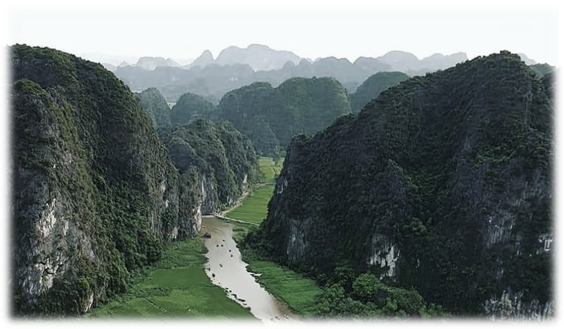
The rebel guardians of Bao Cat responded fiercely to the intruders. The once secluded hamlet had morphed into a counterattack bastion with small weapons, a grenade launcher, and deadly accurate sniping. Luckily, the defenders did not use mortar, saving the Tango troops from an immediate disbandment.
In Duquel’s mind, the remote spot was no longer a wax pencil marking. An irrelevant spot in US military tactical zone charts. Nor a ghostly clue emerging from one of Captain Cardenas’ secretive field intel maps. It transcended the seance parlor conjuration. Bao Cat was now becoming a death trap. A blood encounter with an enemy that once only existed in tattered documents from the French colonial era. He also recalled how in Cardenas’s mind, Bao Cat was but a rustic rest camp for top Viet Cong cadre. Hardcore revolutionaries coming down from Hanoi, trained to wreak havoc against the US and South Vietnamese military bases. To destabilize key opposition political strongholds below the Demilitarized Zone.
Barely conscious, Ulises Duquel heard more rapid-fire bursts of a caliber .30 machine gun. High-velocity bullets flew over his head towards the approaching troops behind him. He spotted a smoking Chicom muzzle protruding through a hooch hole low to the ground near the village entrance. He shouted out an alert, but only blood spurted from his mouth. He spat to clear his airway and tried to gain more consciousness as he gulped for air.
Strange. No pain. It made him wonder if there was still life in him. Ulises gazed around some more and saw no one. Not one insurgent to shoot at, much less the mission’s prime target, Chieftain Quyet Thang. It had presumed that Bao Cat only hosted a small contingent of wily, fanatical protectors of Thang. Rural militia nourished by centuries-old grudges against foreign trespassers in these ancestral valleys.
During the past months, Ulises heavily studied rebellion tradition in those remote hamlets nestled among two ranges of densely forested mountains. The foothills and ridges were distant from the coastal flatlands where Tango Troops usually patrolled along rice paddies and abandoned colonial plantations. Now, after so much training and practice for Thang’s capture, the mission on the higher grounds began sliding downhill fast, with little certainty of a prey to capture.
He knew most highland peasants felt more annoyed than politically rebellious. Since immemorial times, they faced marauders with different uniforms, different speech, and the same arrogance in an unending encroachment on their homesteads. This time, vexed by the arrival of heavily armed, olive-garbed prowlers who climbed their ancestral ridges for no other than tactical reasons.
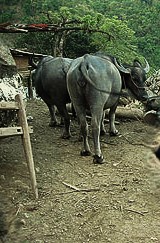
Duquel tried to imagine his shooter. Probably an aged, lonely resistance fighter, a rustic peasant-soldier with a wispy, white beard, and face shriveled up like ruts in a rice field. His entire life simply tending to field and a small buffalo herd. Armed with a rusty Mauser and short loads of ammunition, making each bullet count. Defiant, impatient, and exhausted by the unending struggle to rid the homeland of untiring usurpers. A fate marked by a lifetime of resistance. Warlords, China during the old millennia, the Japanese invasion, a twice-French takeover, and the asymmetrical American war. It was like the perennial and uneven struggle between a tied-up water buffalo and a loose tiger.
Through all the woes, Ulises reflected on which strategy best explained the dire situation at Bao Cat. Did Cardenas mark the wrong target? Undermanned the incursion? Ordered the attack with equivocal timing against a mistaken defensive force? An improper geographical assessment? The environs of Shau Valley and its ridges hugged the Laotian border with inclines and ragged slopes too vertical for infantry patrols accustomed to a flat level of operational dexterity. Perhaps, the overall problem was an improper justification for the expedition. A too elusive target. Just as dissident platoon officer Lieutenant Jeremy Piper had predicted all along.
“Mi Dios! All this was for naught?” Ulises mumbled. “Where was that shithead Lieutenant, anyway? Why doesn’t he order a flank attack against the village? Had he also been hit?”
Because Bao Cat was a covert mission too close to Laos, Ulises knew the patrol could not call in for a protective artillery attack. Much less get air support to safeguard against lethal snipers as the meager Tango platoon climbed the rocky slope to the village mesa. As the shooting had a brief respite on both sides, Ulises Duquel became more deeply distraught.
“Fuck! Why doesn’t Captain Cardenas show up with his Cayuse and direct the operation from the air.”

The defenders opened up again with sniping fire. A bullet hit the dirt behind Ulises’s boots, and another one entered Papio’s left calf. The beefy grunt screamed in pain. He let out a long burst from his M-60 straight into the front huts and the tree line below the triple canopy.
“I’m hit too, Duke,” Papio yelled. “I need ammo belts and more munition cans. Why the fuck is the platoon staying so far behind?”
Ulises wanted to answer him, but his throat remained mute. He was floating in and out of consciousness and making paranoid suppositions. There was so much retrofire to the Bao Cat mission. The troops were not advancing fast enough. He and Papio had wandered too far up in front. They accidentally became point guards. They were both from the same Latino hood in Manhattan. They sought to protect each other. They always stayed tight during routine patrol maneuvers.
Papio always smelled of rifle oil, obsessed with keeping his M-60 greased up and lethal. They were also crapping buddies, blindly reliant on each other when taking a shit in the bush. This required total trust, a soldier willing to give his life for a buddy vacating his bowls. Ulises discovered that soldiers in battle formed silent bonds. The Haitian Dominican–always loaded with bullet belts and a will to fight–quietly protected Ulises. He seemed driven by some arcane safeguarding impulse from another lifetime.
Divagation flowed back and forth. A third rifle crack broke his thoughts. Duquel heard a slug hit the dirt in front of him with a loud thud. He felt the bullet bounce around with the melodic thump of a finely tuned African water drum. Pum, pam, pum.

Duquel quickly transposed the worldly sounds into musical notes. He had done this all his life, even in his death trance. Thump, bam, bam, tum, tatat. His veins pulsated with the beat of congas, clave, timbales, a cymbal. Even a Buddhist bong. Sometimes songs came as primitive tunes. Other times, manifested as a sentimental ballad or mellow samba. It could be a swing or a heart-wrenching Argentine port tango. Maybe a soulful Cuban son about marooned slaves hiding in a tropical swamp. Taboo. Taboo. Taboo.
Silence set in again. Ulises felt his sphincter muscles go into a spasm. He did a double body split. Then he bent himself in a fetal position and relaxed. He flopped face up now near the crest of the dry, small stream ravine, diagonally in front of the village entrance. His eyes stared hard at the midday sun. Though almost in shock, he felt no need to blink. He merely craved a drink of water. To be in a pond, floating on the cool liquid of a jungle brook. It was an urge inspired by the fluid gurgles of cascading water nearby. Sounds which resonated like a watery melody from the rocks behind the hamlet.
Once more, the Viet Cong sharpshooter became still, probably aiming carefully for a kill shot. He had effectively hit Duquel in the throat. His victim still moved around, so he surely pondered an angle aim for the final rub-off. Or perhaps, not wasting another bullet and lying hidden, silent. and invisible to the intruding force.
Though sweat-drenched, Duquel felt cold. For a second, he thought he saw his mother, Teodocia, hovering over a rice paddy. She wore a white cotton gown with embroidered fuchsia flowers. It was the dress she sewed herself at age 17 for her funeral upon being diagnosed with tuberculosis. However, she did not die young, so she stowed the gown in a trunk for another 40 years. She was playing a vintage harmonium she kept in the foyer of the family home.
“I’m dying, mother,” Ulises slurred.
Teodocia’s voice travelled into Duquel’s head. “Not yet. No one dies on the eve of one’s last breath.”
The matriarchal voice was in her usual soft, mellow tone. Curiously, she did not seem to be talking to Ulises but to the soul erupting from his broken body. The voice dispersed like a suave echo, bouncing into the harsh light of past noon. Ulises saw no harps, no angelical chorus, no heavenly gates. He merely felt a thumping rhythm knocking at his temples.
“Death is a weird drama, madre,” he gasped, talking voiceless to himself. He finally blinked and began to close both eyes in the slowest of motion. Ever since his arrival in Vietnam, Duquel wondered day and night about killing or being killed. Was the monk Jampa Kochi right? Once killed, does a KIA become a mere wispy sparkle of eternity? A minutiae blast of life energy shooting out from Bao Cat to merge into the invisible tapestry of the cosmos? Or, perhaps, it becomes a disrupted spirit that wanders forever in the Annamite jungle. Join the host of ancient Viet souls sacrificed to the Motherland during the millennial Vietnamese struggles against foreign rule.
In all likelihood, the red-headed buzzards from the Laotian hills would bicker and squabble. They would gorge themselves with his flesh, and that would be it. End of song, Or more tragically, be sucked into a long night of nothing. Nada. Flesh and bone rotted openly near the fossilized lava boulders. The dense bamboo thickets bordering the path to Bao Cat village. Just that, zero, no more. Nada.

As life slowly drained away, a few more episodes began to play out in his swollen brain. He mustered some remaining strength and pleaded with a final invocation, struggling feverishly to envision the face of his unborn child. Would it have his estranged mother’s superb, smooth Polynesian features? Or would it have his sambo demeanor and bristly hair. Hopefully, his hazel eyes.
As he waited for the moment of demise, Ulises wished for a glimpse of his soon-to-be-born infant. He had passionately engendered this child with an improbable woman. At an equivocal time, place, and bad moment for romance and childbearing. But it was theirs to behold, care for, and cherish.
Scenes of the torrid and unbridled affair with First Lieutenant Kikei Santos passed through his mind in fast-forward pace. It was like a raw, unedited motion picture roll. Some scenes fell into a slow-motion sequence. They depicted exquisite moments of their clandestine liaison as he sank deeper into Kikei’s sensual Hawaiian domains. An intensified sentiment from which he had no escape.
It all had been a mutual conspiracy of passion and defiance. The military code of conduct did rule their lives. Affairs between enlisted servicemen and commissioned officers carried the scarlet badge of military incest. Taboo. Taboo. Taboo. But they defied,
Another bullet zinged overhead. Big tears ran down Duquel’s dusty cheeks.
“Please!” Ulises begged. He so much yearned for a prenatal preview of the fetus pleasantly alive inside his lover’s womb. “One last vision before the kill bullet flies in and the vultures descend.”
♠
 Saigonsong.com - A Vietnam war novel - Rafael Matos