
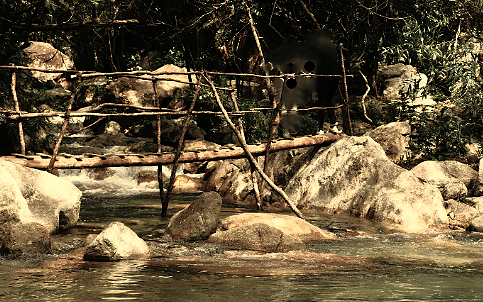
Ulises Duquel slowly crossed the bamboo bridge leading to Bao Cat village. A sniper bullet whizzed by his head. He crouched low in the short elephant grass of the mountaintop plateau and then dropped to the ground. He asked God for help. His pleading felt paradoxical. Being a skeptic, praying was not one of his habits. Swiftly, an answer came.
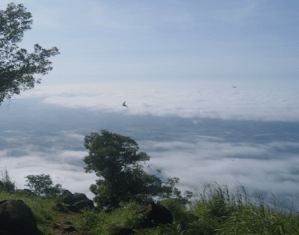
He heard the flutter of wings from above the thick jungle canopy. Through sweaty and tearful eyes, he caught sight of the envoys from heaven. A flock of birds of prey. The flight of Asian vultures lazily swept in from the western Annamite Mountain range. One by one they perched atop the scattered volcanic boulders that nestled the ancient village around the jungle forest. They sat patiently, eyes transfixed on the new quarry.

Duquel sobbed. “I did not ask for birds of prey.” He felt desperation and refusal . He should not be attacking a small, remote Vietnamese hamlet, dodging Viet Cong sniper bullets. Forced into the role of an enemy guerrilla hunter, his real mission in Vietnam had been as a lowly company clerk by conscription in the US Army. In real life, he chose to be a folklore music academic scholar. By circumstance, he was now a prey to foul birds.
A smaller flock of younger bare-neck buzzards soon swept in, signaling a grub quarrel in the making. The new arrivals perched one by one, closer and closer. They sat on deformed and decaying branches of dead trees. Trunks still precariously cling to the surrounding cliffs. Splintered and frayed by many years of indiscriminate carpet bombings and the toxic chemicals of the French Dirty War.
Minutes passed. The battle for Bao Cat suddenly fell silent. Deadly still. Duquel was now a sniper target. He began to lose hope of survival. To while away the moments towards an inescapable end, he started to count the birds. They fastidiously roosted nearer to him.
Then, the vision came. But…
A few instants before staring at what had just appeared, Duquel rewound his mind into a long memory. How war had finally arrived at Bao Cat on the backpacks and ammo pouches of the Tango Troop. A remote, backward villa, isolated and distant from the political power centers of the Asian military conflict. Dormant for millennia, lulled and forsaken inside the shrubby uterus of Vietnam’s central cordillera. Now, on an October day of 1967, Ulises Duquel and his scantily armed comrades in arms came in to splatter military hell all over the tiny hamlet.
Rat-tat-tat-tat-rrraaaatttttt-tat, tat…
Large caliber bullets hit the dusty path to the village. Tiny swirls of splintered rock, shrapnel, and soil sprang up from ground to air.Sniping bullets hit the red clay path a few steps in front of where Duquel fell. Behind him, in the lower trail, slowly stumbled up the platoon lieutenant, the buck sergeant, the radioman. Three riflemen and a grenadier slacked further back on the old stone trail below, ballasted by ammo belts, food rations, and caution.
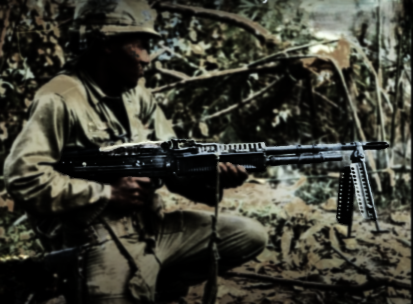
Machine gunner Papio Pinay slowly moved ahead, nearer to Duquel.
“The Vietcong is farting a heavy lead on us, Duke,” whispered Pinay, his husky voice strained with battlefield uncertainty. The gunner crouched lower into the fern grass, a short distance from the bamboo gate. Duquel followed suit and sank deeper into the shallow stream’s surrounding elephant grass. Because the platoon had fallen so behind on the climb, Ulises and Papio had unwillingly spearheaded the assault on Bao Cat.
“I’m just carrying a pistol. Cover me,” Ulises laboriously muttered to his buddy.
“Sure, man. They sneezing gunpowder and coughin’ bullets at us. Thirty caliber, too,” said Papio in a hushed tone. He moved his face about, nose to the air. “It stinks of caca. Maybe we stepped on buffalo dung.”
“No, man. I may have shit in my pants,” Duquel said shamelessly.
Papio grunted. “Hell, it’s those cold C-rations we had for breakfast. Uuggg! Fucking mush of Lima beans and cold franks. My stomach aches, too.”
“No. It is fear, man. Steel cold, fucking fear.” Duquel insisted. ”A sniper in the canopy and automatic fire from the front hooches are pinning us down. Give them a burst.”
Papio did not answer. Ulises turned around and saw the bulky Black man slowly falling into a trance. A veteran of many Viet Cong village assaults, his lips now only fluttered nervously. He seemed muffled by a sudden awe. His voice shuddered.
“Hey man, something bad is about to happen to you,” Papio said hesitantly.
Both crouched lower among the thickets. A small ravine and a shallow stream separated the hamlet from the uphill path. Duquel appraised the narrow rustic bamboo span that connected the stone trail to the gate. Was it booby-trapped? Then his sight blurred. Instead of situational awareness of the moment, Ulises saw images of events past. It was as if old, faded photographs flew inside his mental landscape in a sudden windstorm. And he heard a pulsating rhythm. A flurry of ancient warrior drums and primitive marching beats.
A hot breeze wafted in from the South China Sea. Duquel felt as if Chinese dragons were breathing down his neck. His eyes instinctively searched behind for the rest of the troop. Glancing quickly backwards, he caught Papio staring at him intensely, a tear running down the fatty cheek. The burly half-Dominican, half-Haitian, and ancestrally quarter French –a graft in Vietnam from Manhattan’s Spanish Harlem– began babbling aloud an unintelligible prayer in Spanish. Duquel became impatient.
“Shut up, man. We’re in hush mode,” hissed Ulises. “And besides, you are scaring me shitless!” He stared backward again. Faraway, on the eastern horizon, a flight of helicopters scoured the Da Nang coastline at low altitude. A Cayuse peeled off the formation’s left flank, climbed high, and went westward to the Annamite Cordillera and towards Bao Cat.
Duquel shifted his eyes back and forth. He gauged the village gate again and observed Papio hunch even lower as he crawled towards Duquel. He had more tears in his eyes.
“Adios amigo. You’re going to die now,” cried Papio softly.
Duquel rubbed the sweat from his brow, his hand soiled with the red dust of the jungle trail. “Cállate negro. You’re seeing things again.”
But his combat buddy only stared at him, further entranced. He cried some more.
“Shit!” cursed Duquel, “that’s what happens when you go to war with necromancers. “Just shut up, man.”
A bullet crosscut the air. Duquel’s body hunched violently as if a tense, metal spring suddenly uncoiled deep inside his spine. A high-speed AK-47 round had just pierced his throat. He rolled on his back in spasm and saw the apparition. The monk Jampa Kochi hung in the thin air in front of Ulises, over the ridge precipice, enveloped in a soft burst of pure light. A billowy, satin glow gave him the aura of a saintly ghost. Or was it a mirage of a Buddha? Maybe a hallucinatory facsimile of the many statues Duquel had seen inside temples in the caverns at Marble Mountain. Or at roadside mounds all over Vietnam.
Duquel saw the monk enclosed in a puff of clear, crystalline energy, devoid of earthly trappings. No torn, dusty robe, no worn-out leather sandals, or the usual small tithe bag hanging from Jampa’s shoulders. He seemed to have an ancient manuscript in his hands.

“Welcome to the web of souls,” proclaimed an oozy, melodic voice inside Duquel’s head. “As you can see, in spirit, we are neither cinders nor dust of the Earth. We become the light of the stars. Remember what I told you: stars are the neurons of God.”
The vision lasted only an instant. The holy man vanished into the bright light of the early afternoon sun as it slowly began to settle over the mountain range towards Laos. Duquel felt bleeding from the neck, and his vital pulses slowed down. In seconds, he felt his life force energy dislodging molecule by molecule from his cells. Surprisingly, it all turned out to be painless. He felt no discomfort as physical strength drained away. It was mortality setting in like the impending dusk over Bao Cat ridge in a few hours.
“So, this is death,” he mused, searching the sky again for the monk’s presence. Only vultures were there and seemed to be perching closer. Duquel began to feel like a different being in a parallel existence to battlefront reality. Inside this new, gentle, quiet dimension, past and present were one experience. Days past faded in and overlayed future events, giving a new shape to the moment. All in a single scene.
The pings of bullets ceased briefly, and the battle around him or everywhere stopped. There were no canister explosions or wop-wops of flying war machines. His spirit silently slid into a nether bliss in which colors and…
Ah, yes! The music again. His lifelong companion. As real as solid matter. In a bout of intense synesthesia, he began to taste and smell his favorite melodies. Touch the lyrical emotions that had been part of his young life. Finally, hear in a complete opus his coveted Saigon Song. The melody to his love girl.
A music to capture their strange war love venture. The good old monk Jampa Kochi had said it well. Song is what entangles a soul to the cosmos. Ties a heart to another loving heart. Music that converts the complexity of creation into a simple, sweet, and melodious reality.
“How does one die faster, bonze?” Duquel asked in a low, tremolo voice.
No answer. Duquel suddenly jerked back to physical reality and felt himself lying again on the trail to Bao Cat. He also felt a pang running from the wound in his neck. The Saigon Song stopped ringing in his soul. In the distance, he heard the wailing of wild monkeys. The faraway warble of forest birds. The beating of vulture wings. Nearby, the muffled whimpers of machine gunner Papio Pinay.
At least, he still felt alive and remembering.
♠

 Saigonsong.com - A Vietnam war novel - Rafael Matos